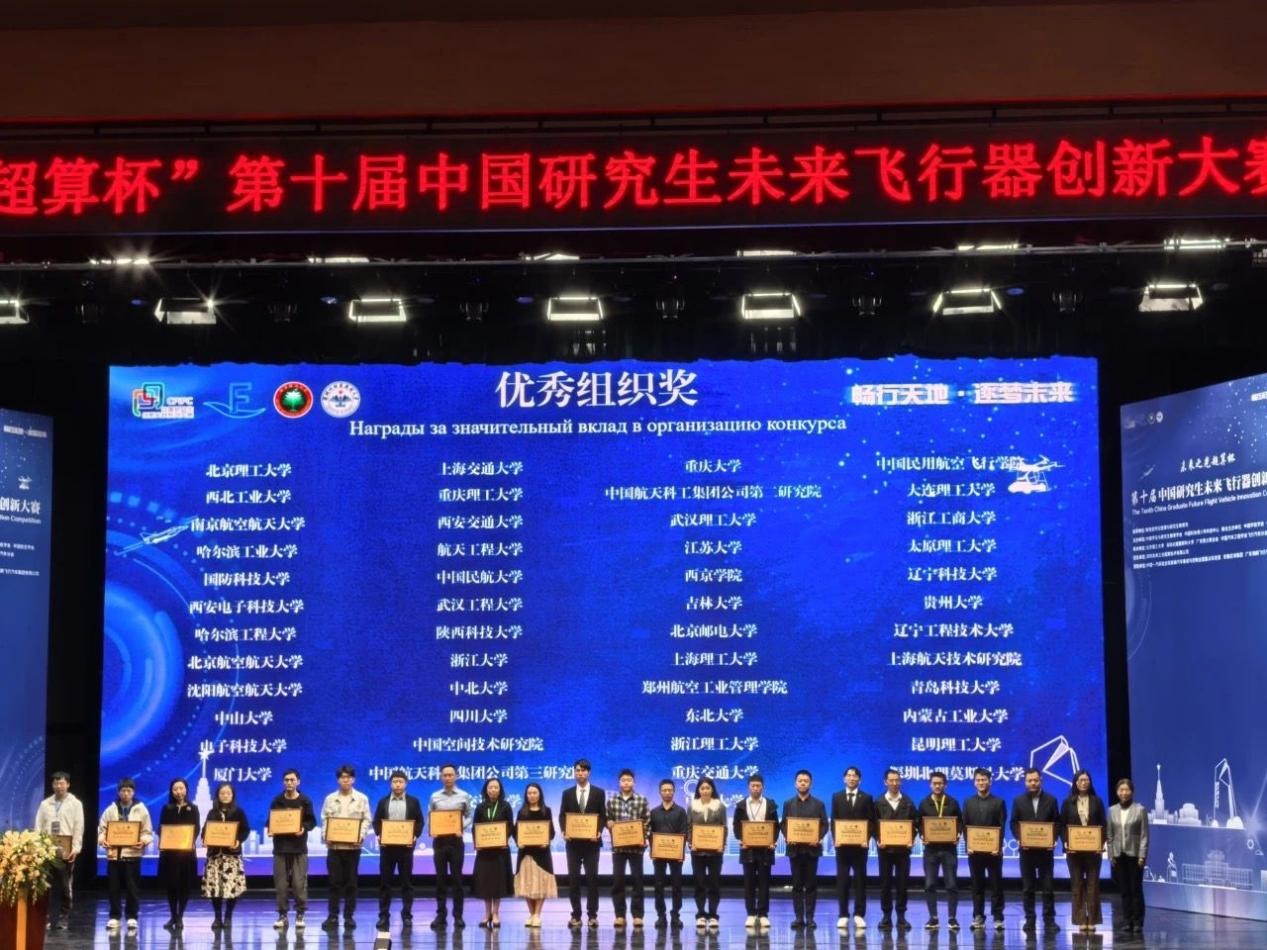
From November 27 to 29, the finals of the "Future Light Supercomputing Cup" 10th China Graduate Future Aircraft Innovation Competition were held at Shenzhen MSU-BIT University. Launched in May 2024, the competition attracted 727 teams (totaling 3,993 graduate students) from 184 domestic and international institutions, with 229 teams advancing to the finals after preliminary evaluations. Wuhan University of Technology (WUT) secured two National Third Prizes and was honored with the "Outstanding Organization Award."
The "WindRacer Tech" team from the School of Automotive Engineering won a National Third Prize for their project, "A Hydrogen-Electric Hybrid-Powered Manned Flying Vehicle Cluster Design." Team members Zheng Chao, Li Hang, Peng Xudong, and Wan Tao, under the guidance of Professor Ma Liuhao, developed a flying vehicle cluster with extended range, rapid mobility, high safety, and environmental friendliness. The team employed a self-developed powertrain and energy management control strategy to optimize performance while minimizing hydrogen consumption. For steady-state control, they integrated neural network algorithms to enhance disturbance resistance, validated through Hardware-in-the-Loop (HIL) testing and field trials. Their design extended ground vehicle platooning concepts to aerial formations, utilizing multi-sensor fusion perception and deep reinforcement learning obstacle-avoidance strategies for intelligent, safe flight coordination.
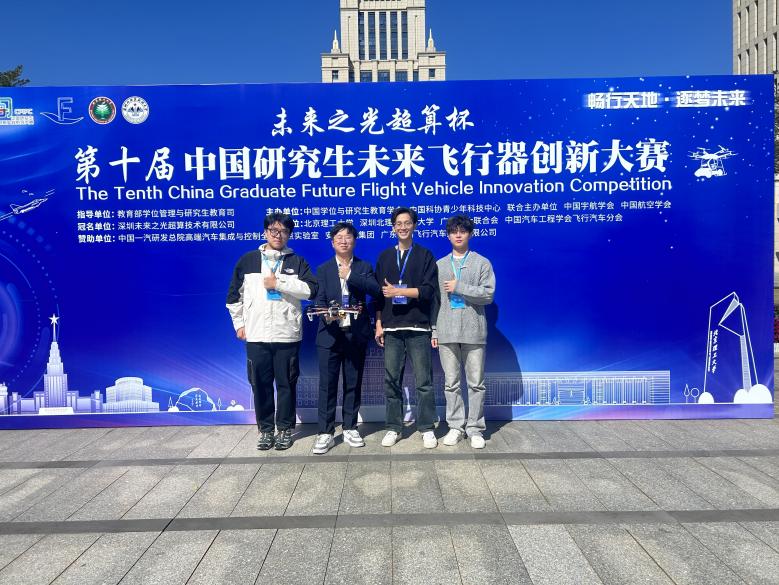
(Photo: "WindRacer Tech" team)
The "Youth in Splendor" team from the School of Naval Architecture, Ocean and Energy Power Engineering also claimed a National Third Prize for their project, "Ride the Wind: An Intelligent Flow-Control VTOL Aircraft." Team members Zhang Lu, Cheng Qipeng, Zeng Xianze, and Xia Lulin, advised by Professor Shao Jiangyan, leveraged deep reinforcement learning-based active flow control to manipulate complex wing flow fields, improving lift-to-drag ratios, maneuverability, noise reduction, and flutter suppression. Their "six-axis tilt-rotor + triple-wing" configuration combined vertical takeoff/landing capability with high-speed cruising stability, reducing vibrations for enhanced passenger comfort.
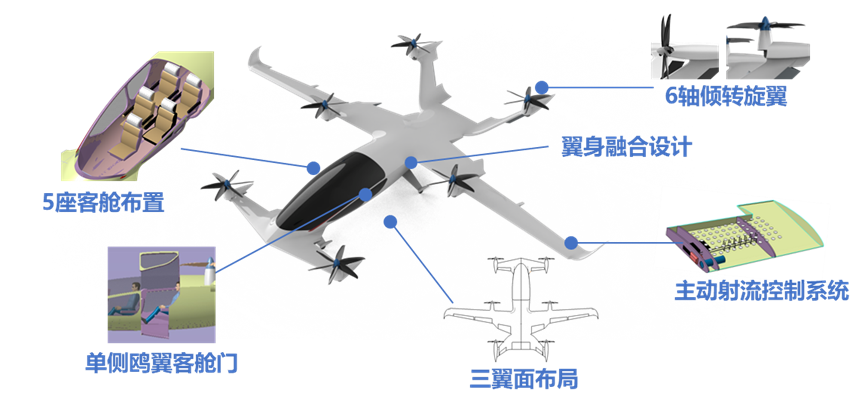
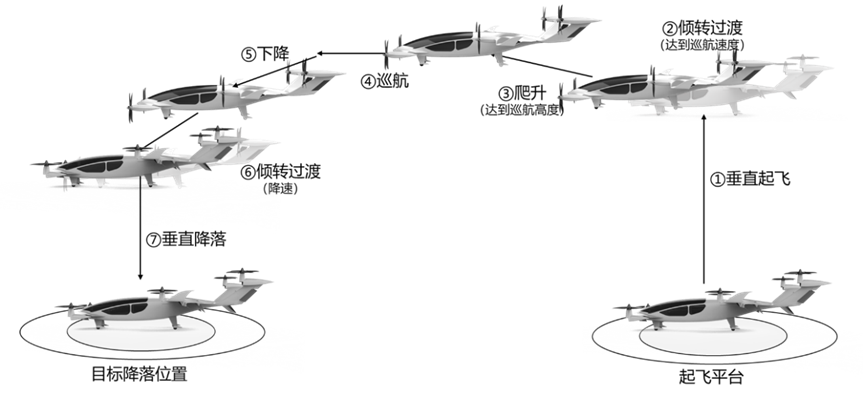
(Photo: "Youth in Splendor" team's project display)
The China Graduate Future Aircraft Innovation Competition, part of the China Graduate Innovation Practice Series, is guided by the Ministry of Education's Department of Degree Management and Graduate Education and co-organized by the Chinese Society of Academic Degrees and Graduate Education (CSADGE), the China Association for Science and Technology (CAST), the Chinese Society of Astronautics (CSA), and the Chinese Society of Aeronautics and Astronautics (CSAA). Centered on the theme "Innovation Shapes the Future," the competition aims to advance aerospace research capabilities and engineering prowess among graduate students, fostering interdisciplinary talent for the industry.
WUT's consistent success in national competitions highlights its commitment to nurturing scientific innovation and practical engineering skills. By encouraging students to "serve the nation through technology" and tackle cutting-edge challenges, the university continues to contribute expertise and solutions to socioeconomic development and China's modernization.
(Contributed by: Xiang Li, Pan Peng | Final review: Cai Chun)

